
Understanding Neurodiversity Affirming Therapy
Neurodiversity affirming therapy is what we do. You’ll find a lot of content on this topic on our practice blog, or the service pages on our website.

Neurodiversity-Affirming Therapy
Neurodiversity-affirming therapy is increasingly recognized as the gold standard for working with neurodivergent adults, teens, and children. Unlike traditional therapy that may focus on “fixing” behaviors, this approach emphasizes understanding, acceptance, and empowerment, helping clients build strategies that honor their cognitive and sensory differences.
1. What Neurodiversity-Affirming Therapy Is
Definition: Neurodiversity-affirming therapy is a therapeutic approach that:
Recognizes ADHD, autism, dyslexia, and other cognitive differences as natural variations of human neurology, not deficits or disorders to be eradicated
Focuses on building adaptive strategies and supporting emotional and functional well-being
Promotes self-compassion and identity affirmation, rather than masking or trying to conform to neurotypical norms
Helps clients navigate social, educational, and occupational environments in ways that respect their neurodivergent traits
Key Principles:
Strengths-Based Approach: Therapy highlights what clients do well, rather than only correcting weaknesses.
Individualized Support: Each client’s strategies, sensory needs, and learning styles are respected.
Empowerment and Self-Advocacy: Clients learn to communicate their needs and request accommodations confidently.
Trauma-Informed Practice: Many neurodivergent individuals experience trauma related to chronic misunderstanding, masking, or ableism; therapy addresses these layers.
Collaborative Goal-Setting: Clients and therapists work together to define meaningful, realistic goals.
2. How Neurodiversity-Affirming Therapy Differs From Traditional Therapy
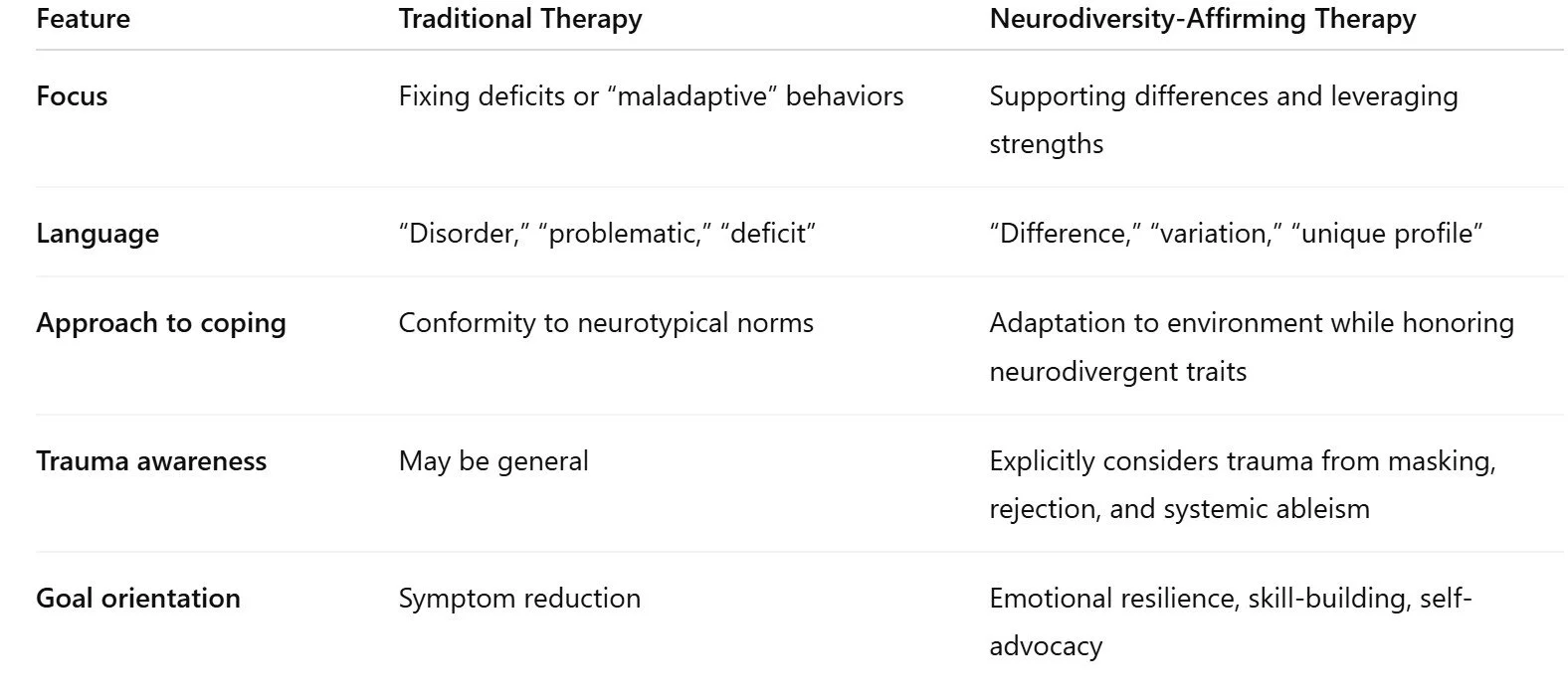
Example (adult):
Traditional therapy: “Let’s figure out how you can stop procrastinating and follow a schedule.”
Neurodiversity-affirming therapy: “Let’s explore how your energy and attention fluctuate, and design a system that works with your natural rhythms so you can complete tasks without shame.”
Example (teen):
Traditional therapy: “You need to sit still and focus like your peers.”
Neurodiversity-affirming therapy: “Let’s find study methods that work with your sensory preferences and attention patterns, so you can succeed without masking.”
3. Goals and Outcomes of Neurodiversity-Affirming Therapy
Adults and parents often report the following outcomes:
For Adults:
Reduced shame and self-criticism
Increased self-understanding and acceptance
Improved emotional regulation and stress management
Stronger professional, personal, and romantic relationships
Enhanced ability to self-advocate at work or in social settings
More realistic goal-setting aligned with strengths and limitations

For Children and Teens:
Reduced anxiety and behavioral burnout
Improved self-esteem and self-concept
Better coping strategies for school and social life
Enhanced communication and self-advocacy skills
Greater engagement in learning and personal interests
4. Common Therapeutic Modalities Used
While neurodiversity-affirming therapy is defined more by philosophy than modality, therapists often integrate:
Cognitive Behavioral Therapy (CBT) for Neurodivergent Kids and Adults
Helps reframe unhelpful thoughts while respecting neurodivergent traits
Often adapted for ADHD or autism (e.g., focus on executive function strategies alongside emotional regulation)
Dialectical Behavior Therapy (DBT)
Supports emotion regulation, distress tolerance, and interpersonal effectiveness
Particularly helpful for adults and teens experiencing intense emotional swings or interpersonal challenges
Acceptance and Commitment Therapy (ACT)
Encourages acceptance of neurodivergent traits while taking committed action toward personal goals
Family Systems or Parent Coaching Integration
Useful when working with children and teens
Helps caregivers develop strategies that respect their child’s neurodivergent profile
Trauma-Informed Approaches
Recognizes the impact of chronic invalidation, bullying, or masking
Integrates strategies to reduce triggers and build resilience
5. Who Provides Neurodiversity-Affirming Therapy
Licensed mental health professionals with specialized training in neurodiversity typically provide this therapy:
Licensed Clinical Social Workers (LCSW-C)
Licensed Marriage and Family Therapists (LCMFT/LGMFT)
Licensed Art Therapists (LGPAT, LCPAT)
Licensed Professional Counselors (LCPC, LGPC)
Psychologists (PhD, PsyD)
Psychiatrists (MD, if medication management is needed)
Key considerations:
Ensure the therapist has explicit training or experience with ADHD, autism, or related neurodivergent traits
Verify they use neurodiversity-affirming language in their website, intake forms, or initial consultation
Confirm they adhere to ethical standards and ongoing professional development
6. How Therapy and Coaching Complement Each Other
Therapy: Focuses on emotional insight, self-compassion, and trauma processing.
Coaching: Focuses on practical skills, accountability, and functional success.
Together, they create a holistic approach:
Emotional understanding supports sustainable skill-building
Practical strategies reinforce emotional resilience
Example (adult):
Therapy: Explore feelings of overwhelm and shame related to missed deadlines.
Coaching: Develop personalized systems for task tracking and time management.
Example (parenting a teen):
Therapy: Help teen cope with anxiety and social stressors.
Coaching: Build homework, study, and organizational routines aligned with their strengths.
7. Expected Life Changes From Neurodiversity-Affirming Therapy
Adults often notice:
Increased self-acceptance and reduced internalized stigma
Better relationship management, including setting boundaries and advocating needs
Greater clarity about career goals and workplace strategies
Reduced chronic stress and emotional burnout
For children and teens:
Improved confidence and resilience
More engagement in learning and personal pursuits
Enhanced family dynamics through understanding and support
In both cases, therapy helps shift focus from trying to “fit in” to thriving in a way that works for their brain.
Therapist Credentials, Certification, and Accountability
When seeking support for yourself or a neurodivergent child or teen, one of the most important considerations is the provider’s credentials and accountability structures. Understanding these will help you distinguish licensed professionals from unregulated providers, recognize legitimate coaching certifications, and ensure that the support you receive is safe, evidence-based, and aligned with neurodiversity-affirming principles.
Therapy Credentials and Licensing
Therapists are licensed by state boards, meaning they are regulated, accountable, and legally required to adhere to professional standards. Licensing ensures that a therapist has:
Completed advanced degrees (master’s or doctorate) in a relevant field
Completed supervised clinical hours
Passed state licensing exams
Committed to ongoing professional education
In Maryland, licensed therapists include Marriage and Family Therapists (LGMFT, LCMFT), Professional Counselors (LGPC, LCPC), Clinical Social Workers (LMSW, LCSW-C), Art Therapists (LGPAT, LCPAT) and Licensed Psychologists. A therapist with any of these licenses is authorized to diagnose and treat ADHD and other forms of neurodivergence. Individual expertise varies. Is it ALWAYS ok to ask a therapist for more information about their training or expertise.
Why licensing matters:
Ensures minimum education and supervised practice
Protects against unethical practice
Provides recourse if ethical violations occur (complaints can be filed with state boards)
Requires continuing education, often including new research, ethical standards, and best practices
Red flags to watch for:
Providers claiming therapeutic authority without a license
Promises of a “quick fix” or guaranteed cures
Lack of evidence of continuing education or specialized training in ADHD, autism, or executive function
Certifications for Neurodiversity Affirming Therapists
Companies that offer continuing education for therapists such as PESI and the Psychotherapy Networker sometimes offer a certificate for therapists who complete a certain series of their trainings. While therapists can attend these trainings in a series with a certificate attached, they can also complete the exact same set of trainings as individual courses. The certificate does not indicate a higher level of training. It is often more helpful to view a therapist’s website to determine whether they speak confidently, clearly, and positively about neurodiversity.
Evaluating Neurodiversity-Affirming Competence
For both therapists and coaches, look for explicit indications that they are neurodiversity-affirming:
Green flags:
Language such as “neurodivergent-friendly,” “strength-based,” “collaborative,” or “non-pathologizing”
Mention of ADHD, autism, dyslexia, or executive function expertise
Continuing education in neurodiversity, ADHD strategies, or executive function
Trauma-informed care principles
Open discussion of accommodations, sensory needs, and individual preferences
Red flags:
Focus solely on “fixing,” “normalizing,” or “correcting” behaviors
Language that implies shame, deficit, or failure (e.g., “disorder” without context)
Lack of clarity about goals, strategies, or progress measurement
Promises of instant solutions or “miracle cures”
Practical Tips for Verifying Therapist Credentials
Verify their license via your state licensing board website. In Maryland that includes the Board of Professional Counselors and Therapists, Board of Social Work Examiners, and Board of Examiners of Psychologists. At any of these websites you can check the therapist’s license number and status and search for any disciplinary actions.
Ask about specialized training in ADHD, autism, or executive function
Confirm experience with adults, teens, children, couples, or families depending on your needs.
Our Qualifications as Expert Neurodiversity Affirming Therapists
As you walk through the steps above, you’ll see that the therapists on our team are all licensed to provide therapy services in the state of Maryland (and some in other states as well). All of us have deeply studied our areas of expertise (ADHD, autism, anxiety, LGBTQIA+ affirmative care, clinical work with families, couples, kids, and teens). We review each other’s work every week. We challenge ourselves to constantly grow and expand our awareness of the needs of the families we serve.

Robin Brannan is an expert neurodiversity affirming family therapist who has been helping neuroexceptional families thrive for over twenty five years. She guides parents, children, individual adults, and partners in connecting with each other, healing from past misunderstandings, and using their strengths to build the life they want. Her work is playful, culturally responsive, and designed to bring joy to you and your family. She directly supervises every therapist on the team at Better Together Family Therapy, and her commitment to high quality culturally responsive care is clearly reflected in this team.
Explore her specialties including Neurodiversity Affirming Therapy, LGBTQIA+ Affirming Therapy, and Child and Family Therapy. Learn more about my approach on my About page.
