Your Love Deserves Queer-Competent Care: LGBTQIA+ Affirming Relationship Counseling Maryland

PRIDE month has always contained multitudes. There is joy in it — the kind that spills out onto streets and into chosen family living rooms and into the eyes of kids who finally see themselves reflected somewhere. There is resistance in it. There is grief in it, and history, and the particular defiance of people who have been told to be smaller and have refused, consistently and beautifully, to comply.
In 2026, PRIDE carries extra weight. Fear is taking up real space — in our heads, in our hearts, in our news feeds — as rights that were fought for and won are being challenged across much of the country. And still. We are here. We are queer. And the love we bring is stronger than the hate. PRIDE is a chance to band together, to have each other's backs, with our allies beside us.
In the middle of all of it — the marching, the visibility, the fight — queer couples are also just living. Loving each other. Getting stuck sometimes. Wanting help.
This post is for those couples. The ones who deserve care that actually sees them.
What "Affirming" Actually Means
There is a difference between a therapist who is technically open to working with LGBTQIA+ couples and one who is genuinely competent to do so. That difference matters more than most therapy websites will tell you.
Queer-competent care requires competence. For us, that means being aware of the wide range of sexual and gender identities that exist in the world, working actively to reduce the impact of minority stress, and understanding that self-discovery and coming out are lifelong journeys — not single events with tidy endings.
It also means not assuming that any of those things are the reasons you are coming to therapy.
You are coming to therapy to meet your specific, personal goals. Those are different in every relationship. We are listening as you tell us about yours.
Affirming care also means growing alongside the people we work with. Partners bring us new information all the time — about identities, about relationship structures, about specific experiences that apply to them. Some will be concepts we've encountered many times. Some will be new to us. And some will be familiar terms that meant something entirely different to someone else. We will always ask what a term means to you, and use it your way when we're with you.
That's what affirmation looks like in practice. Not a checkbox. Not a flag in the window. A genuine, ongoing commitment to meeting you where you are.
We are also here for the full range of relationship structures that queer communities navigate — including ethically non-monogamous relationships and polyamorous partnerships. Whoever you love, however your relationship is built, you're welcome.

A Word About This Moment
Despite the current anti-LGBTQ messaging that is loud and pervasive in the United States right now, something important has not changed: the codes of ethics governing licensed mental health providers.
It is still unethical — and a violation of licensure — for a licensed therapist to engage in conversion therapy. That has not changed. It will not change quietly. Licensed therapists answer to licensure boards, and those boards have not abandoned their commitment to do no harm.
This matters because you deserve to know that you have protection. It is always appropriate — and we would say essential — to ask any potential therapist whether they are licensed, what board they answer to, and what their approach looks like when working with LGBTQIA+ clients. A therapist who is genuinely affirming will welcome those questions. One who gets defensive about them is telling you something important.
Choose a licensed provider. Ask everything that's on your mind. You have every right to know exactly what you're walking into.
Challenges Specific to Queer Relationships — And Why They Matter in Therapy
Building a Relationship Without a Template
Straight cisgender couples inherit a set of assumptions about how relationships are supposed to work — who does what, who leads, what the milestones are and in what order they arrive. Those assumptions are often limiting even for the people they were designed for. For queer couples, they may not apply at all, or may create conflict and confusion as partners assume overlapping roles.
Building a relationship without a template is both a profound freedom and a genuine challenge. Who handles what in your household? What do your rituals look like? What does commitment mean to you, in your own words, on your own terms? These are questions every couple navigates, but queer couples often have to navigate them more consciously and more deliberately — without the shortcut of inherited scripts.
A queer-competent therapist won't bring those scripts into the room. They won't assume. They'll ask.
When Identities Shift and Grow
Identity is not always fixed. People get clearer about who they are as they age, as they feel safer, as language evolves to finally name experiences that previously had no name. A partner might come out as trans, or realize they're bisexual or pansexual, or discover that a framework like neurodivergence suddenly explains things that never quite made sense before.
These moments of clarity are real and meaningful and worth celebrating. They are also genuinely disruptive to a relationship — not because growth is bad, but because partners don't always grow in sync.
There are two skills that help couples navigate identity shifts without losing each other in the process. The first is listening with curiosity and empathy — genuinely wanting to understand your partner's emotional experience, even when it's unfamiliar or uncomfortable. We use Emotionally Focused Therapy to help partners build exactly that kind of understanding. The second skill is finding the reliability in the relationship — identifying what you can count on, what remains steady, even when so much else is in motion. Knowing what they can rely on helps partners face change without spiraling into anxiety.
Change is guaranteed in any long-term relationship. All partners have moments where they are out of sync with each other. The goal isn't to eliminate those moments. It's to have the skills to move through them together.
Navigating Extended Family Without Having to Explain Yourself
Not every queer couple has the family support they deserve. Some are navigating estrangement. Some are managing the particular exhaustion of conditional acceptance — family members who love them in theory but still say the wrong thing, still ask the wrong questions, still make the holidays complicated in ways that are hard to explain to someone who hasn't lived it.
Grief comes up in therapy more often than people expect. We grieve the pieces of our dreams that don't become reality. For LGBTQIA+ couples, that often includes grieving the family support they wish they had, or the simpler path to parenthood that wasn't available to them.
When grief enters the conversation, it needs space. Even if you have the most extraordinary chosen family in the world. Even if you have the children you always dreamed of. The grief for what should have been easier, what should have been freely given, is real and it deserves to be honored.
The beautiful thing about honoring grief in couples therapy is that you don't have to carry it alone. You can experience it together, and be there for each other through it. That kind of witnessing — being truly seen in your loss by the person you love most — can be one of the most connecting experiences a couple has.
Therapy is also a place to work out, together, how much explaining you owe anyone. The answer is probably less than you've been giving.
Minority Stress Lives in the Body

The armor you wear to move through a world that doesn't always make room for you is real and it is heavy. Understanding what minority stress does to your nervous system — and how dysregulation can make it hard to be soft with the person you love most, even when you're safe with them — is some of the most important work queer couples can do in therapy.
It isn't fair that you begin each day with a baseline level of stress just from being your full self in the world. But it's true. And sometimes the armor that protects you outside makes it hard to be open inside — with your partner, in the relationship that is supposed to be your safe place.
Queer-competent therapy understands this. It doesn't pathologize your protection. It helps you find the door.
Your Questions, Answered
What's the Difference Between a Gay-Friendly Therapist and an LGBTQIA+-Affirming Therapist?
More than you might think. And the difference matters.
Gay-friendly isn't enough. Friendly is a low bar. Your relationship deserves more than tolerance and good intentions from the person you're trusting with your most vulnerable moments.
True affirmation means having genuine allies in the therapy room. It means a therapist who understands the landscape of queer experience — not just in theory, but in practice. One who has done their own work around bias and assumption. One who keeps learning as the community grows and language evolves. One who is invested, not just open.
When you're evaluating a therapist, it's worth asking what "affirming" actually means to them specifically — what they do, how they stay current, what their practice looks like with LGBTQIA+ clients. A genuine ally will have real answers. Friendly is easy to perform. Competence takes work.
Do I Have to Explain My Identity to My Couples Therapist?
Yes and no.
When you choose to share how you identify, we will likely ask you to tell us what the terms you use mean to you — because language is personal, and we would rather understand your experience than assume we already do.
What we will never do is ask you to explain why you identify as you do. Your identity is not a puzzle to be solved or a position to be justified. And if you choose not to share how you identify at all, we won't require it. You get to bring what you want to bring, when you choose to bring it.
Is Couples Therapy Different for Same-Sex Couples?
Mostly, no. The work of staying connected — of being truly seen by your partner, of navigating conflict and change and the ordinary accumulation of a shared life — is the same regardless of who is in the relationship.
Where it can be different is this: LGBTQIA+ couples have often already done significant thinking and talking about roles, responsibilities, and relationship structures before they ever set foot in a therapy office. Many of the conversations we might need to introduce with other couples, you've already had. You may be coming in with skills and self-awareness that other couples have to develop from scratch. That's worth acknowledging.
At the same time, a conflict or rift in a queer relationship can sometimes cut deeper. The journey to finding a partner — to finding someone who loves you fully, as your whole self — can be harder and longer for LGBTQIA+ individuals. When that partner misunderstands you, or when you feel unseen by them, the hurt can carry extra weight. A queer-competent therapist understands that. They won't minimize it or treat your relationship like any other without accounting for the specific road you've traveled to get here.
What If My Identity Changes During Couples Therapy?
It happens. More often than you might expect.
Couples therapy is a journey of self-discovery — for all partners. You will learn things about yourself and about each other. And sometimes what you learn changes how you choose to describe yourself.
We see this frequently when partners discover their neurodivergence in the course of therapy — and suddenly find that adding "neurospicy" to their identity vocabulary explains things that never quite had a name before. The same can be true of sexual identity, gender identity, or the way you understand your own needs and patterns in relationship.
However you identify when you walk in, and however that evolves while we're working together, we will be doing the same thing we always do: looking at how you and your partner support each other as you both grow and change. The labels may shift. The commitment to understanding each other doesn't have to.
How does Better Together Family Therapy provide Couples Therapy in Maryland? Where can I learn more?
We’ve written quite a bit on our blog about our approach to couples therapy, particularly with LGBTQIA+ identified and neurodivergent couples. If you’d like to get a feel for our approach, these articles may be a good starting point.
LGBTQIA+ Affirming/Neurodiversity Affirming: A Canvas for All Couples
How to Ask Your Partner to go to Couples Therapy (and what to do if they say no)
Can a Queer Competent Couples Therapist Help If Only One of Us Is LGBTQIA+ Identified? Will the therapist take that partner’s side?
A couples therapist can definitely help, and the therapist’s queer competence will be important.
However, when we hear this question the first thing we’ll ask in response is “why are you coming to therapy? What are you looking for in and from a therapist?” You might be coming in because you’re arguing about chores or feeling frustrated with each other’s spending habits. Or you might be struggling with what each partner’s identity means in the context of the relationship.
If one partner identifies as LGBTQIA+ and the other does not, one question worth exploring is where the non-queer-identified partner is on their journey toward becoming affirming. Most partners actually identify differently from one another in at least one way — one might identify as pansexual and the other as lesbian, or partners might have different kinks, or different relationships to their own gender. Only one partner holding a queer identity is really just a variation of this.
What matters most is whether each partner is genuinely invested in affirming the other's identity. It doesn't have to be instantaneous. Understanding takes time and communication, and that's what therapy is for. But both partners do need to be on that path — moving toward affirmation, not away from it — in order to reach a place of real peace together.
A queer-competent therapist can hold that journey with both of you. Without taking sides. Without making either partner feel like the problem. With curiosity about both of your experiences and genuine investment in the relationship you're building.
What to Ask a Therapist Before You Commit
You have every right — and we would say every reason — to ask detailed questions before starting therapy. Here are some worth bringing to a consultation call:
Have you worked with couples like ours before? And what did that look like?
What's your understanding of minority stress, and how do you address it in couples work?
How do you handle it if my identity shifts during the course of our work together?
What's the difference between being gay-friendly and being queer-competent? How would you describe your own practice?
Are you familiar with Persistent Drive for Autonomy, and how do you work with it? (For neurosparkly partners who want to know their nervous system will be understood)
Do I have to explain my identity to you, or do you already have a working knowledge of the landscape?
A therapist who is genuinely affirming will welcome every single one of these questions. The consultation call exists for exactly this purpose.
How the Process Works at Better Together Family Therapy
When you reach out to us, we'll talk through costs, logistics, and find a therapist we think will be a good fit for your relationship. During that initial call, we'll hold a weekly appointment time for you — so that time is yours while you speak with the therapist and make your decision together.
Your therapist will reach out to discuss their approach. Ask everything that's on your mind. The questions that feel too direct, the ones you've been afraid to ask before — those are exactly the right ones. Based on how the conversation feels, you'll decide whether to keep that first appointment or not. No pressure either way.
If you're still figuring out how to bring up the idea of therapy with your partner, we have a guide for that too.
Your Love Is Worth Fighting For
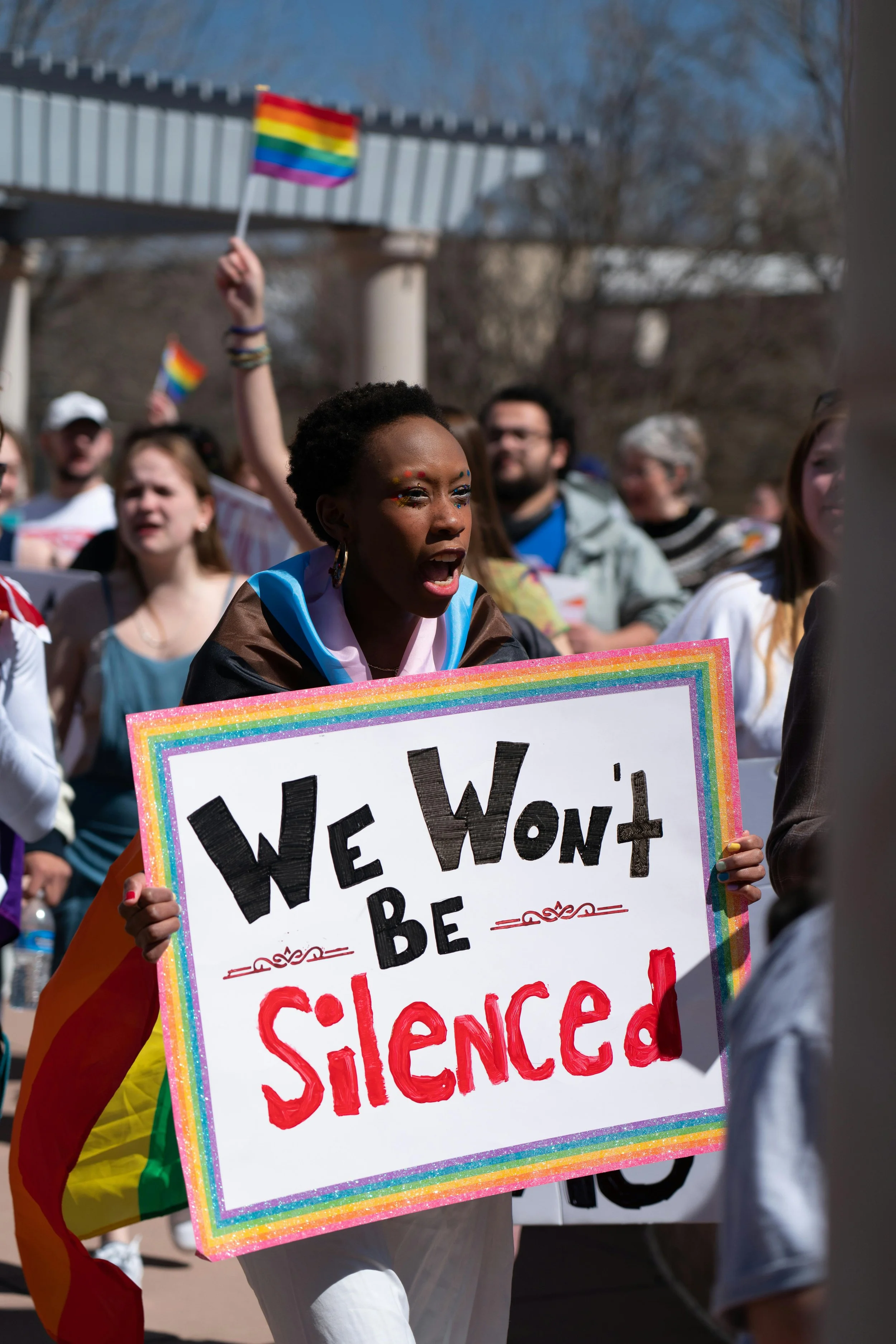
PRIDE started as a riot. It has always been about the radical, necessary, world-changing act of living and loving openly — of refusing to make yourself smaller so that other people are more comfortable.
Your relationship — however it looks, whoever it includes, whatever labels fit right now and whatever ones might fit better tomorrow — deserves care that sees it fully. Not care that tolerates it. Not care that files it under "diverse populations." Care that shows up for it, learns from it, and is genuinely honored to be trusted with it.
That is what we are here to offer. Couples therapy in Bethesda and online throughout Maryland, for queer couples who are done settling for less than they deserve.
For more on what neurodiversity-affirming, LGBTQIA+-affirming relationship counseling looks like in practice, our guide to couples and family therapy in Maryland is a good place to start.
We are rooting for you. We have been this whole time.
Happy PRIDE. 🏳️🌈

Robin Brannan is an expert neurodiversity affirming family therapist who has been helping neuroexceptional families thrive for over twenty five years. She guides parents, children, individual adults, and partners in connecting with each other, healing from past misunderstandings, and using their strengths to build the life they want. Her work is playful, culturally responsive, and designed to bring joy to you and your family. She directly supervises every therapist on the team at Better Together Family Therapy, and her commitment to high quality culturally responsive care is clearly reflected in this team.
Explore her specialties including Neurodiversity Affirming Therapy, LGBTQIA+ Affirming Therapy, and Child and Family Therapy. Learn more about my approach on my About page.
